
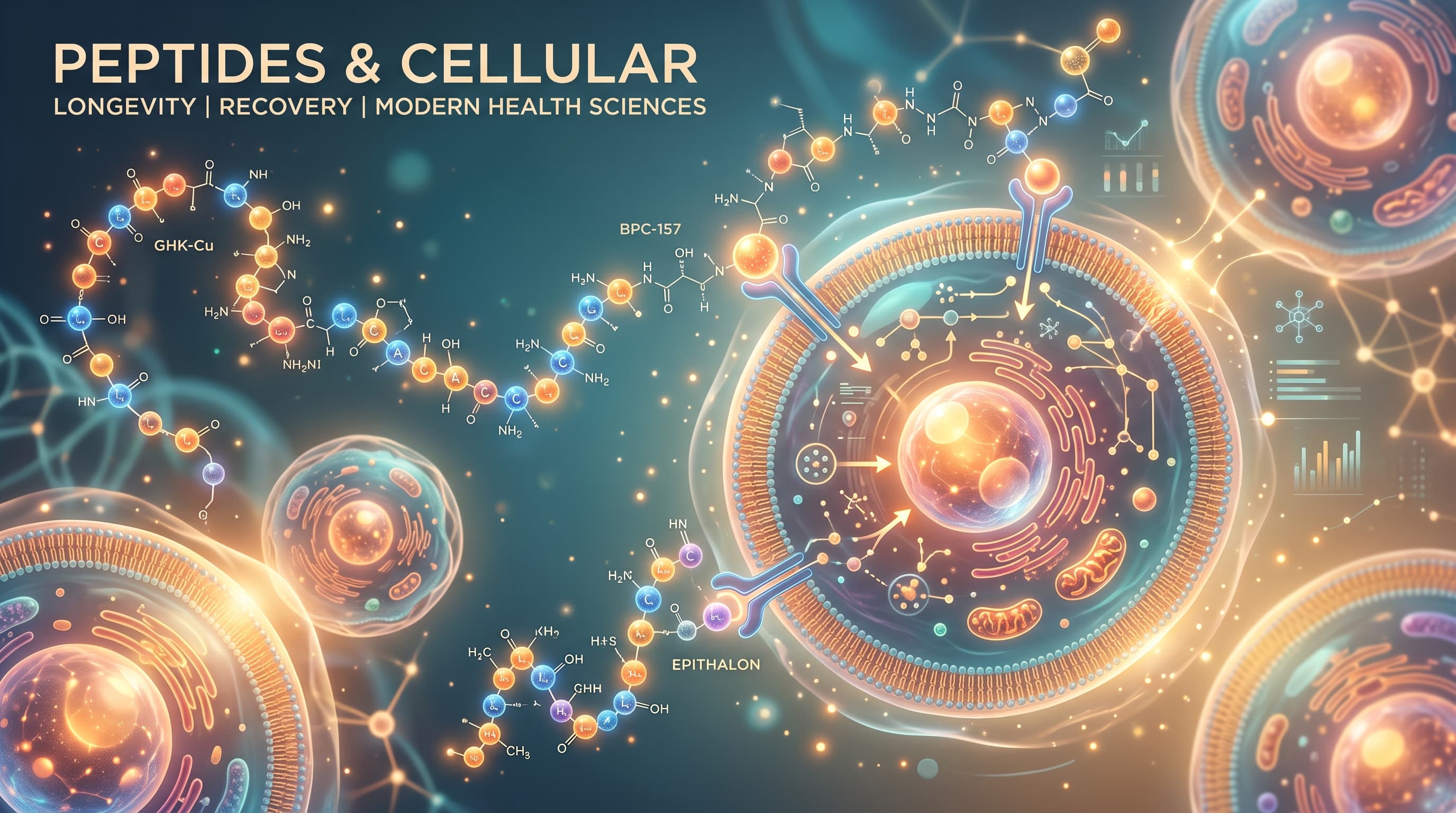
If you’ve spent any time in wellness circles recently, you’ve likely heard the term "peptides." They are frequently touted as the "next frontier" in biohacking, promising everything from rapid injury recovery to slowed biological aging.
But what actually are they, and is the science as impressive as the social media claims?
What Are Peptides, Simply Put?
At their most basic level, peptides are short chains of amino acids—the fundamental building blocks of proteins.
Think of proteins as complex, long-form novels, and peptides as shorter sentences or "post-it notes." Because they are small, they are incredibly efficient at delivering messages throughout the body. They act as biological signaling molecules, essentially telling your cells to perform specific tasks, such as:
- "Repair this damaged tissue"
- "Lower this inflammation"
- "Produce more collagen"
- "Boost energy metabolism"
Because our bodies naturally produce these signals, peptide therapy attempts to mimic or amplify these natural processes to optimize health.
Why Are They Suddenly So Popular?
Peptides have moved from specialized clinical settings into the mainstream because they offer targeted results. Unlike broad-spectrum supplements (like multivitamins) that provide general support, many believe (and some studies suggest) that specific peptides can act like a "surgical strike" on a health goal.
Popular Applications
- Recovery: Athletes and those with injuries often turn to peptides like BPC-157 or TB-500, which are studied for their potential to accelerate the healing of tendons, ligaments, and gut tissue.
- Longevity & Anti-Aging: Peptides like Epitalon are studied for potential effects on telomere length (the protective caps on DNA), while others (like CJC-1295/Ipamorelin) aim to boost natural growth hormone production to support muscle mass and skin elasticity.
- Metabolic Health: GLP-1 agonists (e.g., semaglutide) have revolutionized weight management by signaling satiety to the brain, proving that peptide-based medicine can have profound, systemic effects.
The Reality Check: Evidence vs. Hype
While the biological potential is exciting, there is a significant gap between what is happening in a petri dish and what is proven for humans.
- Clinical vs. Experimental: Only a handful of peptides are FDA-approved (like those for diabetes, obesity, or HIV-related fat distribution). Most "longevity" peptides are used off-label, meaning they lack large-scale, long-term human safety trials.
- Animal vs. Human Data: Many claims about peptides like BPC-157 are based on rodent studies. While these results are promising, they do not guarantee the same safety or efficacy in humans.
- Regulation Gaps: The market is flooded with "research chemicals" sold online that are not regulated for purity, dosage, or sterility.
Things to Watch Out For
If you are considering peptide therapy, it is not a "plug-and-play" supplement. Because peptides influence hormonal and cellular pathways, they carry real risks if misused.
The Risks
- Hormonal Imbalance: Peptides that stimulate growth hormone can potentially cause joint pain, insulin resistance, or fluid retention.
- Off-Target Effects: By stimulating one pathway, you may unintentionally downregulate another.
- Contamination: Unregulated online sources may provide products that are impure, mislabeled, or carry risks of infection from improper injection techniques.
Best Practices for Safety
- Work with a Professional: Only pursue therapy through a licensed physician or clinic that uses compounding pharmacies with verified batch testing (produced by 503B facilities. Ask your clinic where they are sourcing it from).
- Start with Baselines: Have comprehensive blood work done (hormones, inflammatory markers, metabolic panels) before and during therapy to monitor your body's response.
- Prioritize Fundamentals: No peptide can "out-perform" poor sleep, bad nutrition, or a lack of exercise. View peptides as an addition to a healthy foundation, not a replacement for it.
Bottom Line: Peptides represent a sophisticated evolution in precision medicine. However, because the science is still emerging, the smartest approach is to remain cautious, avoid "research chemical" websites, and keep your primary healthcare provider in the loop.